
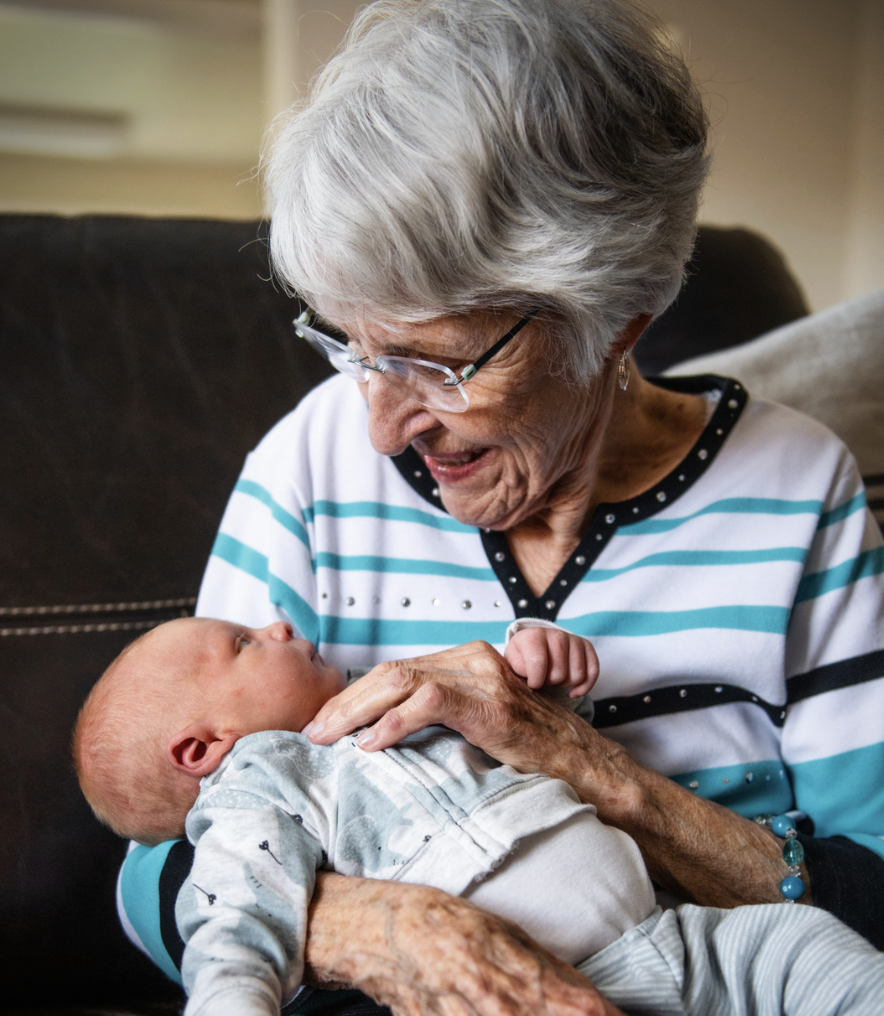
This week, I was stopped in my tracks (well, to be honest, it stopped my scroll!) by a finding about babies’ brains and Alzheimer’s disease. It turns out, healthy newborns appear to begin life with surprisingly high levels of the same toxic protein buildup linked to Alzheimer’s, only for those levels to fall rapidly in early infancy. Maybe one clue about brain ageing might eventually come from studying the very start of life.
Read more here:
👶 Did you know that healthy babies are born with the same toxic protein buildup in the brain that causes Alzheimer’s disease? New research has found that newborn babies have almost twice the amount of the toxic proteins than people with dementia. In their first few months of life, this dramatically decreases back to the lower levels we’d see in healthy adults. Further studying how these proteins become cleared from the brain during infant development may give us insight into how to remove them for people with dementia. This paper was published in Brain Communications, with a summary by Scientific American.
😢 Gen X women are currently experiencing a mental health crisis. In the UK, a recent survey found that two-thirds of women over 50 are struggling with their mental health, yet the vast majority are not seeking help. In this article from The Guardian, learn more about potential reasons for this generational crisis, hear from midlife women who have experienced mental health problems, and discover the de-stigmatising mental health campaign that completely backfired. Read it here.
📝 Spotting menopause itself is easy. As soon as a woman goes one consecutive year without bleeding, she’s gone through menopause. But perimenopause, the years leading into menopause, are much harder to define. There’s no universal test or diagnostic tool, and all women experience perimenopause differently. This piece by Nature News explores the benefits and risks of hormone replacement therapy and connects the dots for the different ways women experience perimenopause. Read it here: The missing pieces of menopause science.
⏈ We still don’t know much about why people with ADHD are so easily distractible. But a new study has found that adults with ADHD experience more slow-wave brain activity, resembling sleep, when trying to focus on a task. This sleep-like, slow-wave activity was linked to subjective experiences of mind wandering and distractedness, indicating that changes to brain activity may at least in part underlie why adults with ADHD struggle to maintain attention. This study was published in the Journal of Neuroscience, with a summary in Nautilus.
🏃♀️ Compared to men, Australian women do not exercise enough. The exercise gender gap begins at adolescence, and once women become mothers, the gap only widens further. When women shoulder the bulk of domestic responsibilities, looking after their own health often takes a back seat. This episode of ABC’s Ladies, We Need to Talk podcast discusses how this exercise gender gap forms and shares ways for women to reclaim their time to stay healthy and move their bodies more. Listen here: Are men stealing our exercise time?
💬 “The sort of housework that women and men do tend to be different because men often their jobs are like, you know, the yard work or gardening or playing with the kids and so on. That can be fairly flexible. So, you’re not having to be at the school gate at three or childcare at five. Women have the housework that often has to be done. It’s urgent. It’s pick-ups, it’s cooking and it has this time urgency to it that is very difficult for them to go, oh, I think I’ll go for a run now, so I’ll do that later.” Prof Lyndall Strazdins
👂You may know that protecting against hearing loss can protect against dementia. But did you know that menopause is linked to poorer hearing? Your auditory system has oestrogen receptors throughout, with oestrogen having a neuroprotective effect. However, when oestrogen declines with menopause, in some women, that leads to hearing loss, tinnitus, and altered sound processing. To learn more about the relationship between menopause, hearing, and cognition, read this review in Trends in Cognitive Sciences or the LinkedIn summary by the lead author.
🤖 AI and machine learning are powerful research tools for identifying subtle patterns in large datasets. But computational models are only as good as the data on which they’re trained. With many brain imaging datasets either excluding women or excluding key details about women’s health, the benefits of AI become limited. In this article for The Transmitter, Prof Amy Kuceyeski explores the need to improve the reproductive health information collected in neuroimaging studies and to increase collaboration between AI researchers and women’s health researchers. Read the article here.
💊 Biohackers are attempting to slow or even stop their bodies’ ageing. It can range from taking supplements to million-dollar ‘longevity’ treatments. I’ve been sceptical of biohacking for a long time now. Back in 2019, I even flew to San Francisco to film an ABC Catalyst episode on biohacking, which you can watch a clip of on Instagram here. But in this episode of The World as You’ll Know It podcast, host Carl Zimmer talks to ageing experts to tease out fact from fiction in the world of biohacking. Listen on Spotify here or read the transcript here.
🤰 If you’re looking for a quick catch-up on the emerging neuroscience of matrescence, then check out this article in The Conversation. The piece explores the most recent brain imaging studies that are tracking how women’s brains change with a first pregnancy, second pregnancy, and postpartum. Read it here: Pregnancy changes the brain – and we are only beginning to understand how and why.
🧠 The maternal brain is more responsive, flexible, and efficient. Yet all too often, new mothers believe their postpartum brains are broken or dysfunctional. It’s time to redefine the narrative around motherhood to highlight all the ways that matrescence sculpts your brain and changes your mind for the better. In this hour-long interview by the ABC, recorded live at the Sydney Opera House, hear from science journalist and author Lucy Jones about her lived experience and research on pregnancy, motherhood, societal expectations, and maternal mental health. Listen to the conversation here.
💬 “…I carried my children, though, of course, not all mothers do. And I thought that she would grow in my body and then I’d give birth to her and kind of go back to who I was before, but with this, you know, huge additional responsibility. And the reality was so different. So in those early months of new motherhood, the only place I could really find myself was in reading Kafka’s Metamorphosis…” Lucy Jones.
Share the love
[Sassy_Social_Share]
About Dr Sarah
Neuroscientist, Author, Speaker, Director of The Neuroscience Academy suite of professional training programs.
Latest Posts
Free 10 day micro-training in neuroscience

Learn one neuroscience concept a day!
10 simple, bite-sized lessons in brain health, delivered daily to your inbox