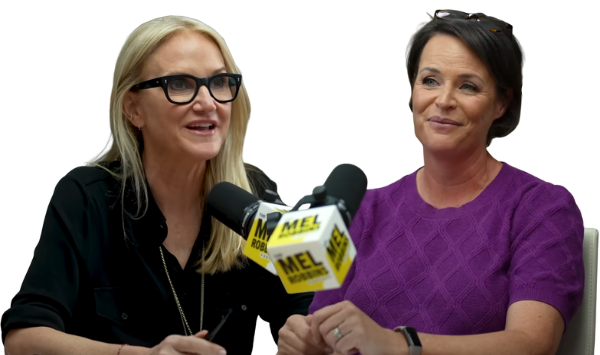

The Australian media picked up a new Monash Uni study on “Baby Brain” this week, and I’ve been commenting both on TV and in the papers as more evidence that pregnancy doesn’t cause damage. Instead, it reflects the cognitive overload and overwhelm of new parenthood.
My take?
“The sum of the neuroscience is telling a story of adaptation versus dysfunction and forgetfulness… If women are reporting that there is something changing in their brains, and it’s not their brains, we need to make sure that we are targeting the right interventions. It’s no good telling women, ‘Oh, your brain changed during pregnancy to make you feel slow and sluggish, and forgetful. And so what we’re going to do is sell you some supplements.’ We need to start talking about how to support them.”
Read more news below 👇
The World Economic Forum recently released The Women’s Health Innovation Radar report to identify gaps in women’s health research. The report found that while only 20% of funding goes to women’s health, the majority of that goes to just ovarian cancer and menopause, leaving other women-specific conditions significantly underfunded. Meanwhile, for conditions that affect both genders but disproportionately or differentially affect women, like cardiovascular disease, there is minimal women-focussed research. For research translation, women are still vastly underrepresented in clinical trials and the development of clinical products, outside of those focused on ovarian cancer. You can read the full report here or view the corresponding data dashboard here.
Improving your brain health doesn’t have a deadline. The BrainHealth Project brain-trained nearly 4,000 people aged 19 to 94 over three years to see whether they could improve their overall brain health. The training only took 5-10 minutes per day and focused on supporting participants’ cognitive function, connectedness, and mental well-being. Regardless of where a participant started, they showed improvements in their brain health. There was no benefit ceiling. Participants across all demographics improved, regardless of age, gender, or education, and the more a participant engaged with the training, the more they benefited. This study was published in Scientific Reports, with a summary from the Centre for Brain Health.
Women with polyendocrine metabolic ovarian syndrome or PMOS (recently renamed from polycystic ovary syndrome or PCOS) may enter perimenopause later than women without PMOS. They also report experiencing fewer menopausal symptoms, especially hot flushes and sleep issues. This finding suggests a prolonged exposure to oestrogen, which may help women with PMOS age better in later life. This work was published in Acta Obstetricia et Gynecologica Scandinavica, with a non-academic summary available here.
A new paper has reframed ADHD as an interesting framework called energy deficit hyperactivity disorder (EDHD). The EDHD model suggests that the energy supply to parts of the ADHD brain is unstable, causing fluctuations in attention, focus, and the ability to perform tasks. This model moves the understanding of ADHD away from behavioural willpower and towards neurobiological capacity. However, it’s particularly important to note this model is not a new clinical classification or diagnostic tool. This concept was published in Neuroscience & Biobehavioral Reviews, with a non-academic summary here and a TikTok summary here.
This world is built around men. But what would it look like if we reimagined our world to also cater to the unique needs of women? In this TED Talk, design consultant Virginia Santy shares her projects that are reinventing male-focused spaces with women in mind, traditionally, resulting in improved productivity, collaboration, and inclusion. If you do enjoy this talk, I also recommend reading Invisible Women by Caroline Criado-Perez, which explores how the gender bias in big data collection has resulted in a world designed for men. But first, you can watch the TED Talk here: Why the world is still not built for women.
“Do you feel comfortable? Really think about your experience right now. Are you too hot or too cold? How does your butt feel sitting in this chair? Do you feel safe? These questions might seem a little silly, but silly for different reasons, depending on your gender identity. We don’t really ask these questions of men, because for the most part, we don’t have to. Our environments are built for men and how they experience the world. For you women, these questions are different because we are so conditioned to accept our own discomfort, to accept the environments or systems around us as normal and natural, we often fail to realize when they don’t quite fit us, we just work around it.” Virginia Santy
Share the love
[Sassy_Social_Share]
About Dr Sarah
Neuroscientist, Author, Speaker, Director of The Neuroscience Academy suite of professional training programs.
Latest Posts
Free 10 day micro-training in neuroscience

Learn one neuroscience concept a day!
10 simple, bite-sized lessons in brain health, delivered daily to your inbox